
The Real Difference Between Film and Digital Wedding Photography
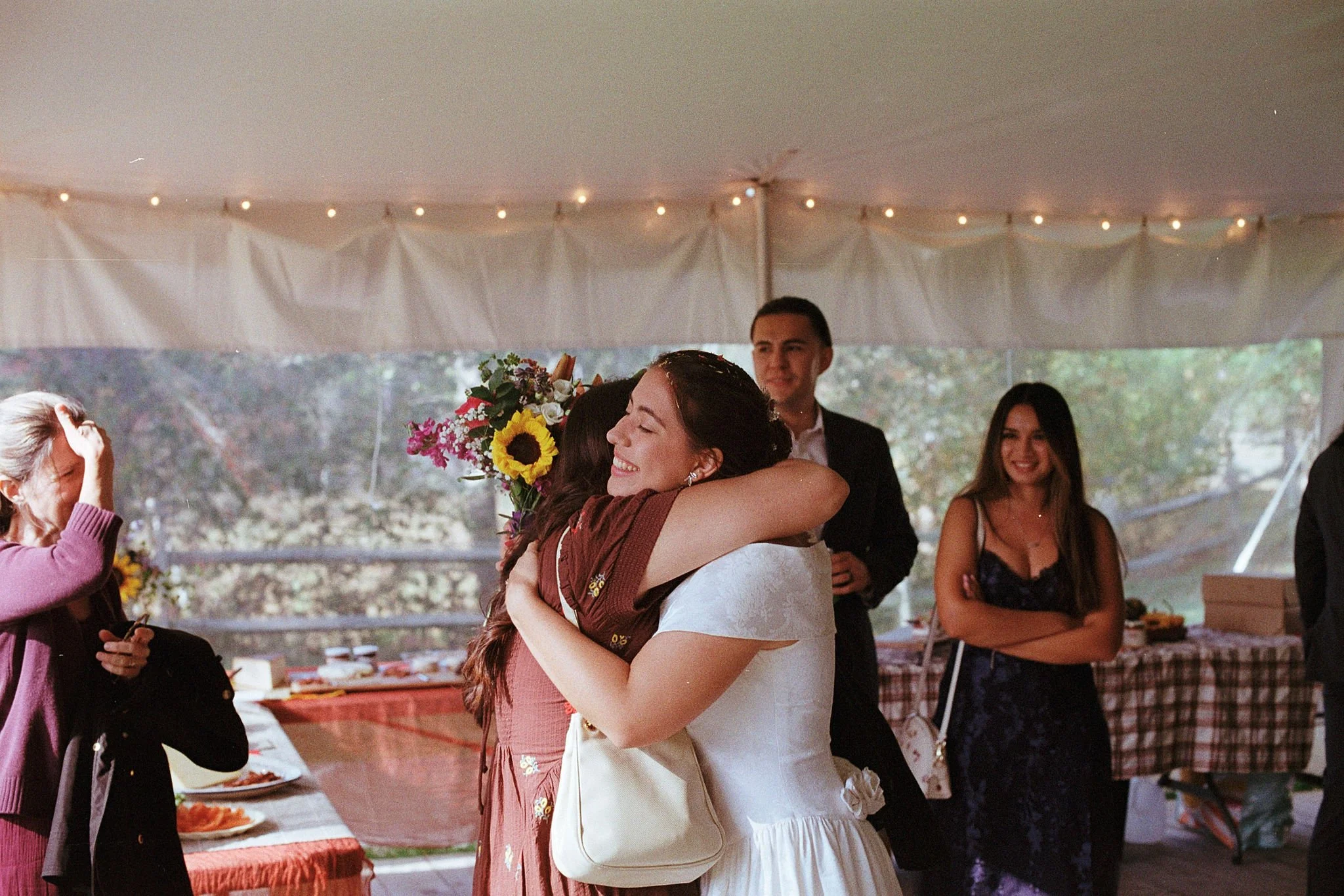
Film wedding photography is everywhere right now. But if you’re planning a wedding and keep seeing photographers advertise “film + digital,” you might reasonably wonder what the difference actually is. Is it just the grain? The colors? Is one better than the other?
We photograph every wedding on both digital and film, and to us, the biggest difference isn’t simply how the finished photographs look. The cameras themselves change the way we photograph.
A Different Kind of Camera
Digital cameras record each photograph onto a memory card that can hold thousands of images. Film cameras work a little differently. We load a physical roll of film into one of our vintage cameras, advance it through the camera frame by frame, and have a limited number of exposures before it’s time to rewind the roll and load another.
There’s no screen to check the photograph afterward, and changing ISO isn’t as simple as adjusting a camera setting: the film itself determines the ISO. That means choosing what to load means thinking ahead about the light and where the day is headed. We carry multiple film cameras and rolls with us so we can switch between film stocks and digital as conditions change.
It’s a more hands-on way of working, from loading and rewinding rolls during the wedding to keeping track of what we’ve shot throughout the day. Film isn’t something we pull out for a handful of portraits; those cameras stay with us alongside our digital equipment, and we move between the two throughout the wedding.
Film Slows Everything Down
A roll of 35mm film gives us 36 frames. There’s no “spray and pray” - we can’t take ten versions of the same shot and choosing the best one later, and there’s no screen on the back of the camera to immediately check what we got. There will also be times that we have to stop and re-load a roll. That changes the rhythm a little.
With film, we have to wait and commit to the frame when it feels right. That doesn’t mean every film photograph is carefully composed or posed; in fact, some of our favorite rolls are full of chaotic dance floors and silly expressions. But there is an inherent limitation to the medium that makes every press of the shutter a little more deliberate. During busy wedding days, slowing down can be a challenging choice.
Digital Offers Flexibility
There’s a reason we haven't traded our digital cameras for a bag full of film. As said, weddings move quickly. Light changes constantly, people move from bright outdoor ceremonies into dark reception spaces, speeches happen unexpectedly, kids run across dance floors, and sometimes several things worth photographing are happening all at once.
Digital gives us the speed and flexibility to respond to every call. We can shoot quickly when a moment calls for it, work in extremely low light, and document a wedding thoroughly without worrying about how many frames remain on a roll. When someone wants us to take a quick portrait with their cousin, we don’t have to triple-check the light or fumble for a new roll of film while they wait. That’s why, for us, digital remains an essential part of documenting a wedding well.
Film is Delightfully Unpredictable
Film responds to light differently than a digital sensor, and each film stock has its own characteristics. There will be grain, shifts in color, occasional light leaks, missed focus, and other little imperfections that aren't necessarily things we'd try to reproduce in a digital photograph. That’s okay, we like that.
We aren't looking for film to give us a 35mm version of what our digital cameras already capture. Part of what we enjoy about shooting film is seeing how the medium interprets a scene, and sometimes that means being surprised when we develop a roll.
And sometimes, clients find real meaning in those little imperfections. Where we see an artistic light orb or a swooping bird, they see a long-lost family member saying hello.
The Development Process
Traditionally, digital images are offloaded from memory cards to an external or cloud device, like a hard drive, and then moved into an editing program for color correction, cropping, removing imperfections, etc. The final images are then exported back to the storage space and uploaded to the client’s gallery for viewing.
For film, most photographers will take their completed rolls to a commercial lab for development. They may pay $20-$50 per roll, depending on the type of film, and wait a few weeks for them to be returned, either via email (digital scans) or as negatives. Most photographers get emailed scans, and upload them to the client gallery just like digital.
For us, this is a part of the process that's a little different: our rolls don't get mailed off to a lab.
We develop our 35mm film by hand in our home. Once the negatives are developed, they're scanned and the finished photographs are incorporated into the wedding gallery. l It's a slower and much more hands-on process than importing a memory card, but we've been developing our own film for years. Being involved from the moment a roll goes into one of our cameras until the finished photograph is delivered is part of why we've continued shooting it.
Is Film Better than Digital?
We don't think so. They're different tools for different things, and that's exactly why we carry both.
Digital gives us reliability, speed, flexibility, and the ability to photograph everything a wedding day throws at us. Film asks us to work a little differently and gives us photographs we wouldn't necessarily make with a digital camera, but the vibes and nostalgia are unmatched. We don't want an entire wedding gallery to come from one at the expense of the other. We like seeing crisp digital photographs next to grainy 35mm frames and instant photographs you can hold in your hand.
For us, the real difference between film and digital is about what each allows us to bring to the same wedding.
See more of our film wedding photography: